
Is Japanese Selvedge Denim Actually Special? Or Raw Fashion Pretension?
Why denim nerds happily pay $300 for jeans woven on vintage 1950s Toyoda shuttle looms in Okayama, Japan.
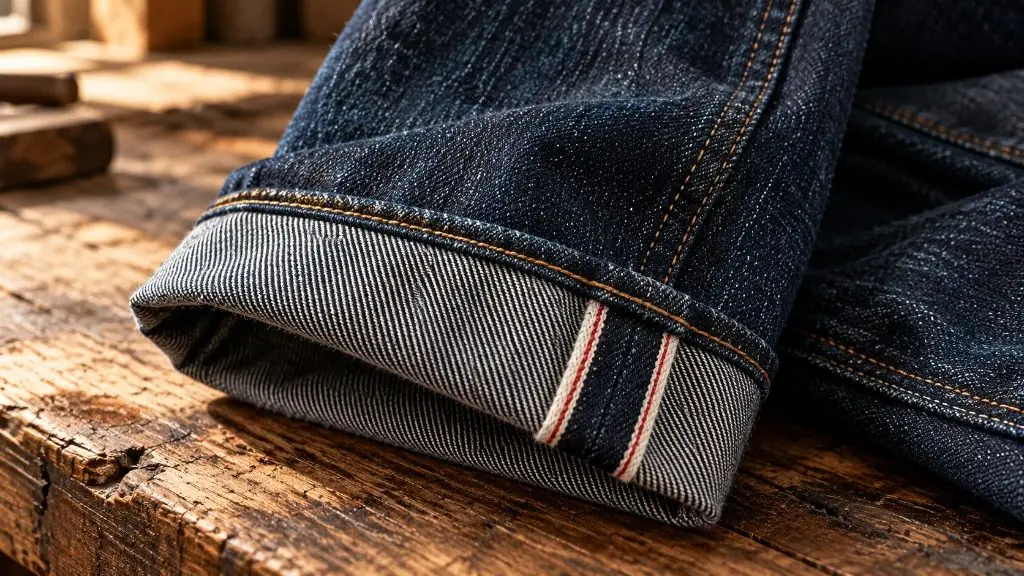
Walk into any shopping mall and you can purchase a pair of stretchy, pre-washed blue jeans for $45. They come pre-faded, soft out of the package, and blended with 2% elastane so you can bend your knees without resistance.
Yet in the enthusiast underground, denim aficionados pay $250 to $400 for stiff, cardboard-like trousers woven in Kojima, Okayama Prefecture. They refuse to wash them for six months, meticulously fold up the cuffs, and boast about “slub”, “chatter”, and “rope-dyeing”.
So we ask: Is Japanese selvedge denim genuinely special fabric? Or is it an exercise in overpriced hipster nostalgia?
Listen to the 45-Second Verdict
Studio voice briefing • No fluff • Zero ads
1. The Technology: Shuttle Looms vs. Projectile Looms
To understand the difference, you have to understand how modern mass-market denim killed character:
- Modern Projectile Looms: In the 1970s, mass manufacturers replaced vintage shuttle looms with high-speed projectile and air-jet looms. These machines blast weft threads across 60-inch wide bolts of fabric at blinding speed. The edges of the cloth are raw and frayed, requiring overlock stitching to stop them from unraveling. The resulting fabric is smooth, uniform, flat, and sterile.
- Vintage Toyoda Shuttle Looms: Japanese artisans bought old shuttle looms from closed American mills. A shuttle moves back and forth mechanically across narrow 29-inch fabric, looping the thread continuously around the edge to create a clean, tightly woven, self-finished border: the “self-edge” (selvedge).
- Low-Tension “Chatter”: Because these vintage wooden and iron looms vibrate and rattle under low tension, they introduce irregular micro-variations into the weave. This texture (known as slub and nep) creates a three-dimensional hand feel that modern computer-controlled looms cannot replicate.
2. The Living Patina: Rope-Dyed Indigo
Mass denim is dyed by dipping fabric into chemical vats that penetrate the cotton yarn to its core.
Traditional Japanese denim uses rope-dyeing: thick ropes of cotton yarn are quickly dipped into natural indigo vats and exposed to oxygen, creating an indigo layer strictly on the surface while leaving the core pure white.
As you walk, sit, and live in the jeans over years, the indigo slowly abrades away at high-friction zones (behind the knees, at the pocket edges, over the thighs), revealing the white core in personalized high-contrast fade patterns that tell the story of your daily life.
3. The Honest Drawbacks
- The Break-In Agony: For the first 3 to 4 weeks, 15oz raw selvedge denim feels like wearing sandpaper and sheet metal. It scratches the back of your knees and restricts movement until the cotton fibers soften.
- Indigo Bleed: In the initial months, natural indigo will crock onto light-colored sneakers, white furniture, and car leather seats.
- Price Barrier: Quality Japanese selvedge jeans start around $200 (such as Japan Blue or Sugar Cane) and climb past $400 for heavyweight iron-dyed brands like Samurai or Iron Heart.
The True Cost-Per-Use (CPU) Equation
Can an upfront purchase make rational economic sense over cheaper disposable alternatives? Here is the actual mathematical equation of long-term ownership:
The Real Long-Term Economics
Drag the sliders to see how an heirloom investment compares to disposable alternatives.
💎Japanese Raw Selvedge Denim
Initial price: $240 (1-time purchase)
✓ 0 replacements needed • Lifetime warranty
⚠️Fast-Fashion Stretch Jeans
Initial price: $45 (chips every 1.5 years)
7 pots sent to landfill
Mathematical Insight: Over 20 years, the premium cookware saves you $70 in replacements and prevents 6 pots from going to a landfill.
4. The Final Verdict
Japanese selvedge denim is one of the few garments in modern fashion that defies disposable consumerism. It is not cheap, and it requires patience, but it will outlast four pairs of mall jeans and evolve into a customized second skin.
Is It Special?
✓What Makes It Special
- •Self-finished edge will never fray or unravel
- •Rope-dyed indigo develops unmatched personal fades over time
- •Extreme tear-resistance and heavyweight structural longevity
- •Preserves historic low-tension shuttle weaving traditions
✕Where The Hype Fails
- •Requires weeks of uncomfortable physical break-in
- •Raw indigo rubs off on white sneakers and furniture
- •Significant entry price ($200 to $400)
Check Real-Time Pricing & Stock
*Transparency: Direct non-affiliate retailer link provided purely for reader convenience.
Did you find this investigation helpful?
Give a heart to endorse 100% independent, sponsor-free product criticism.
✓ Recorded! Thank you for supporting independent testing.
IsItSpecial WhatsApp
Never miss an unvarnished teardown. Get instant drop notifications, verified buying links, and price alerts directly inside WhatsApp.
Join IsItSpecial Channel→Never miss an unvarnished verdict.
Deep materials science, industrial design history, and honest de-influencing. Zero corporate sponsored fluff. Unsubscribe anytime.
Powered by Substack • 100% spam-free • One-click unsubscribe
Is It Special Editorial Desk
Textile & Craftsmanship CriticWritten by our independent product & cultural testing desk. We purchase our own subjects, reject corporate sponsorship, and test items under everyday conditions to filter true quality from marketing hype.
Related Investigations
More critical teardowns in Craft & Design
Is the $450 KitchenAid Artisan Stand Mixer Actually Special? Or Just Countertop Decor?
A mechanical autopsy of the world's most famous stand mixer. Why planetary gearboxes and 26 pounds of die-cast zinc crush modern plastic appliances, and where its mechanical limits lie.
Is the $420 Le Creuset Dutch Oven Actually Special? Or Culinary Vanity?
A metallurgical inspection of France's iconic enameled cast iron cocotte. Why vitreous glass fused at 800°C outlasts cheap enamel, and whether it justifies a 600% price premium over Lodge.
Is the $360 Moccamaster Actually Special? An Engineer's Teardown
A mechanical inspection of the iconic Dutch drip machine. Does handcrafted copper-element heating justify a 10x price premium over standard coffee makers?

Is the $25 Lodge Cast Iron Skillet More Special Than a $300 Luxury Non-Stick Pan?
Why high-tech chemical non-stick cookware ends up in a landfill within three years, while a chunk of molten iron from Tennessee lasts four generations.